Wild Atlantic Way

Explore Achill Island

Achill Island is Ireland’s largest offshore island, connected by bridge at Achill Sound. It is a place shaped by the Atlantic, where mountains rise from the sea and life moves at a slower pace.
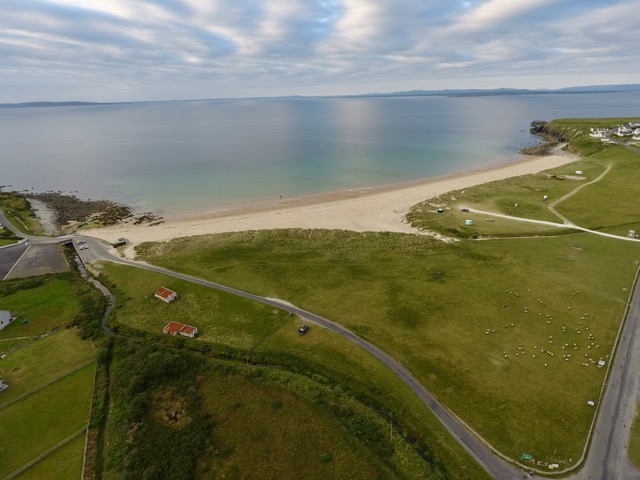
Aerial view of Dugort beach, fields and Atlantic coastline
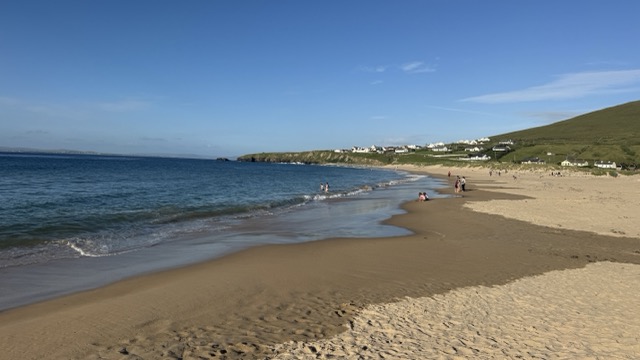
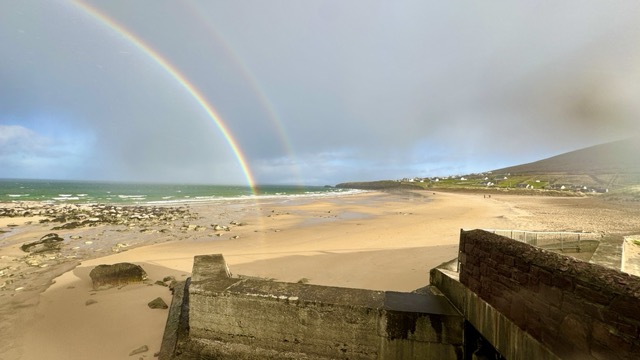
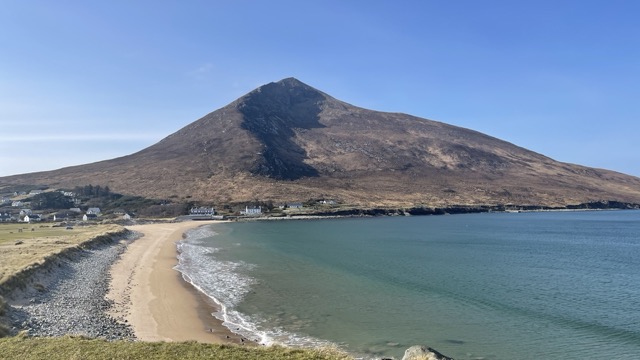
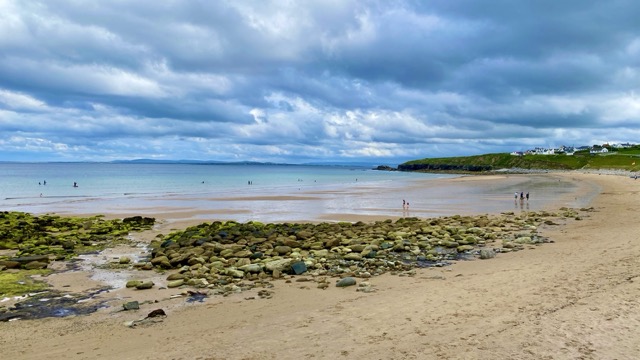
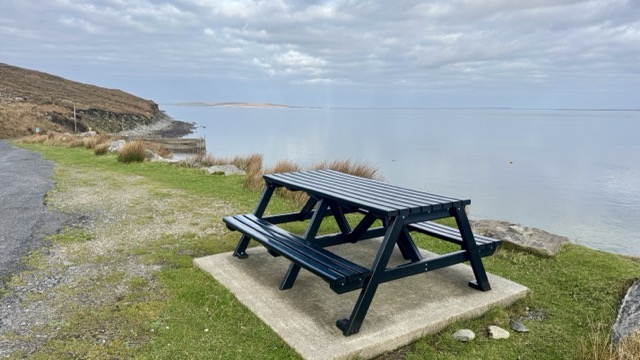
Dugort beach with clear blue water and people walking along the sandRainbow over Dugort beach and the Atlantic shorelineSlievemore Mountain rising above Dugort beach and turquoise waterRocky shoreline and sandy beach at Dugort under dramatic cloudsPicnic table overlooking the calm Atlantic water near Dugort

Achill is one of those places that does not give itself away all at once. You do not arrive and understand it immediately. It opens slowly, through weather, through landscape, through stories, and through the people who still carry its memory in how they speak about the land.

Out on Ireland’s western edge, Achill Island feels both exposed and deeply rooted. The Atlantic is always present. It shapes everything, from the light and the wind to the rhythm of daily life. Even on calm days there is a sense of movement, as if the island is never fully still.

A Landscape That Tells Its Own Story

The first thing most people notice is the scale. Mountains rise sharply from the sea, with Slievemore stretching long and quiet above Dugort. Croaghaun, one of the highest sea cliffs in Europe, drops dramatically into the Atlantic, its edge often lost in mist.

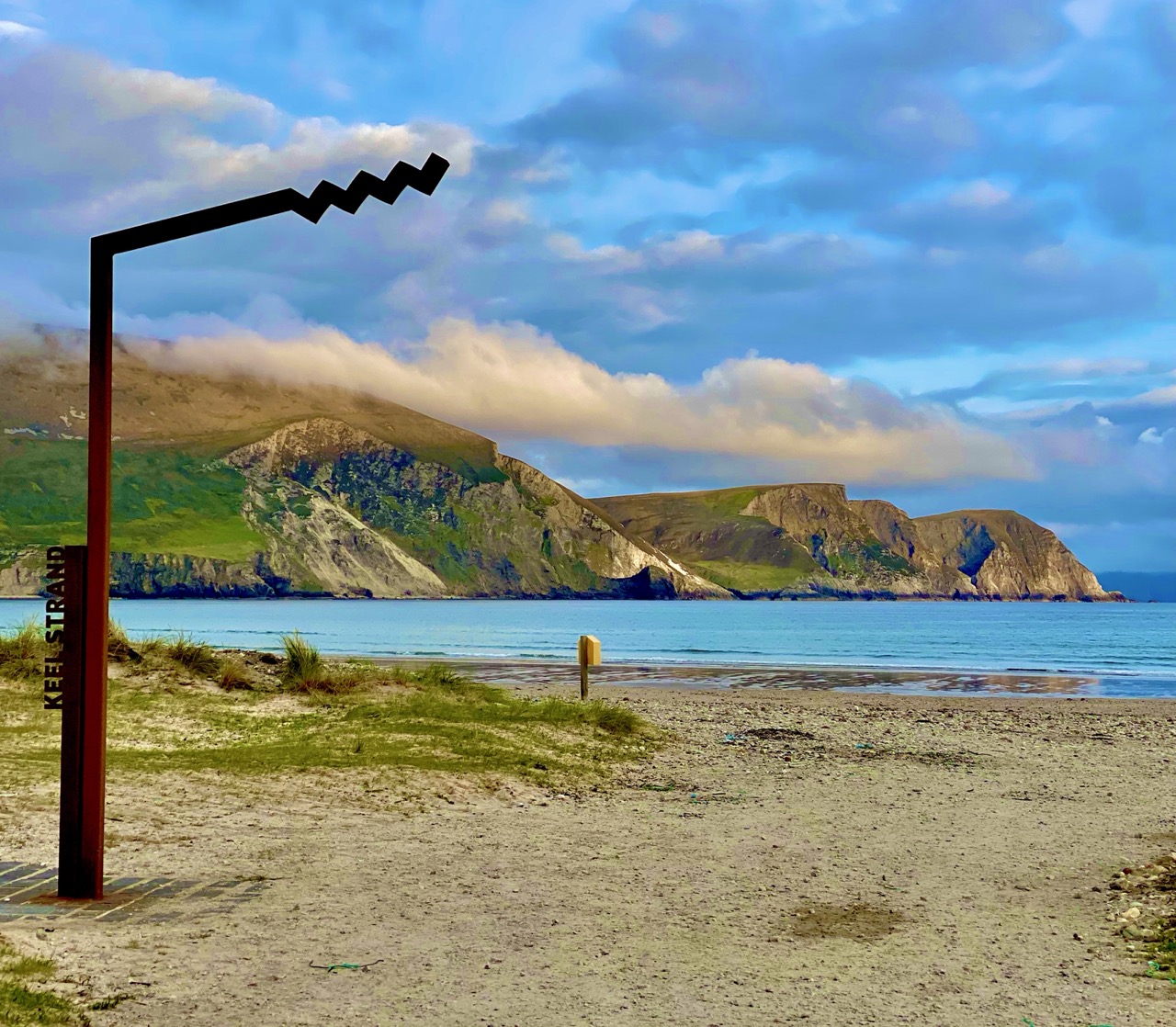
Keem Bay is perhaps the most photographed place on the island, and for good reason. A perfect curve of white sand sits between steep green hills, the water shifting between deep blue and turquoise depending on the light. But even here, it is not just the view that matters. It is the sense of isolation, the feeling that you have reached somewhere at the edge of the map.

Further inland, the Deserted Village beneath Slievemore offers a different kind of landscape. Rows of abandoned stone houses stretch across the hillside. These are not ruins in the romantic sense. They are quiet reminders of lives once lived, of families who worked this land before leaving during and after the Great Famine. When you walk through them, the silence carries weight.
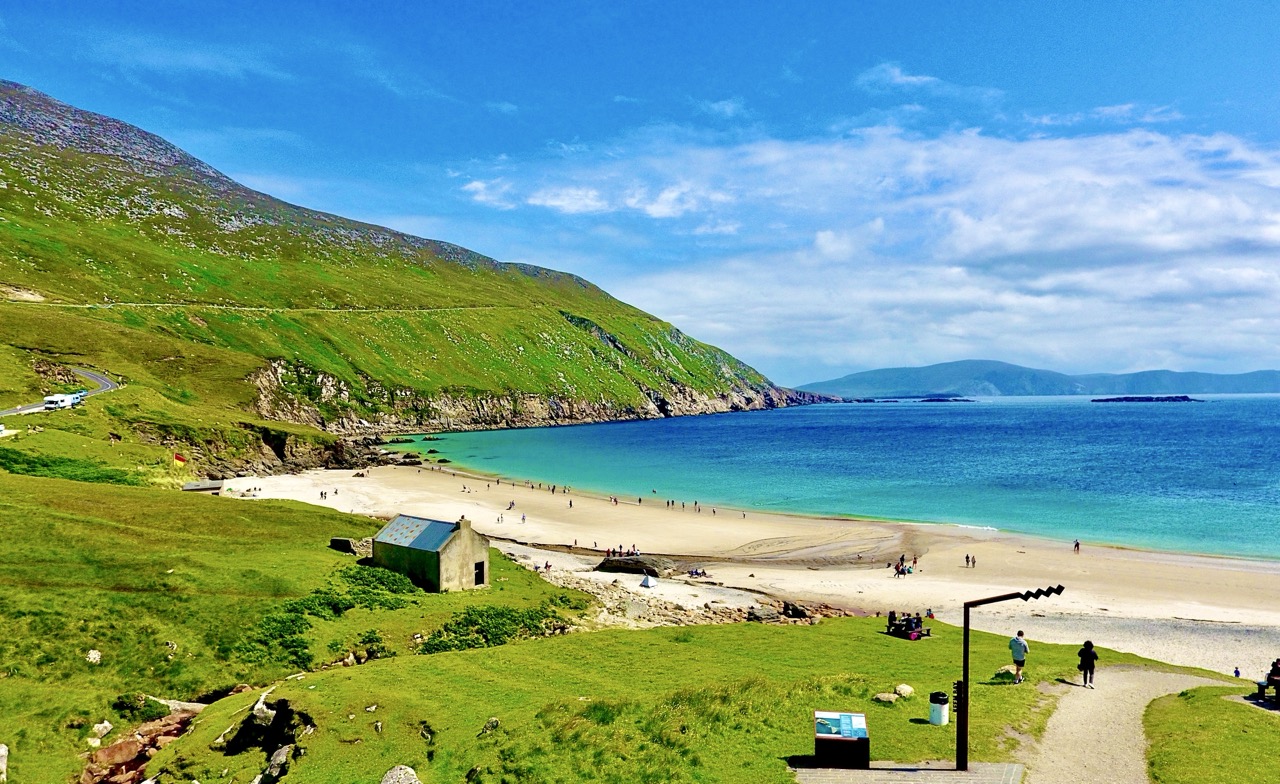
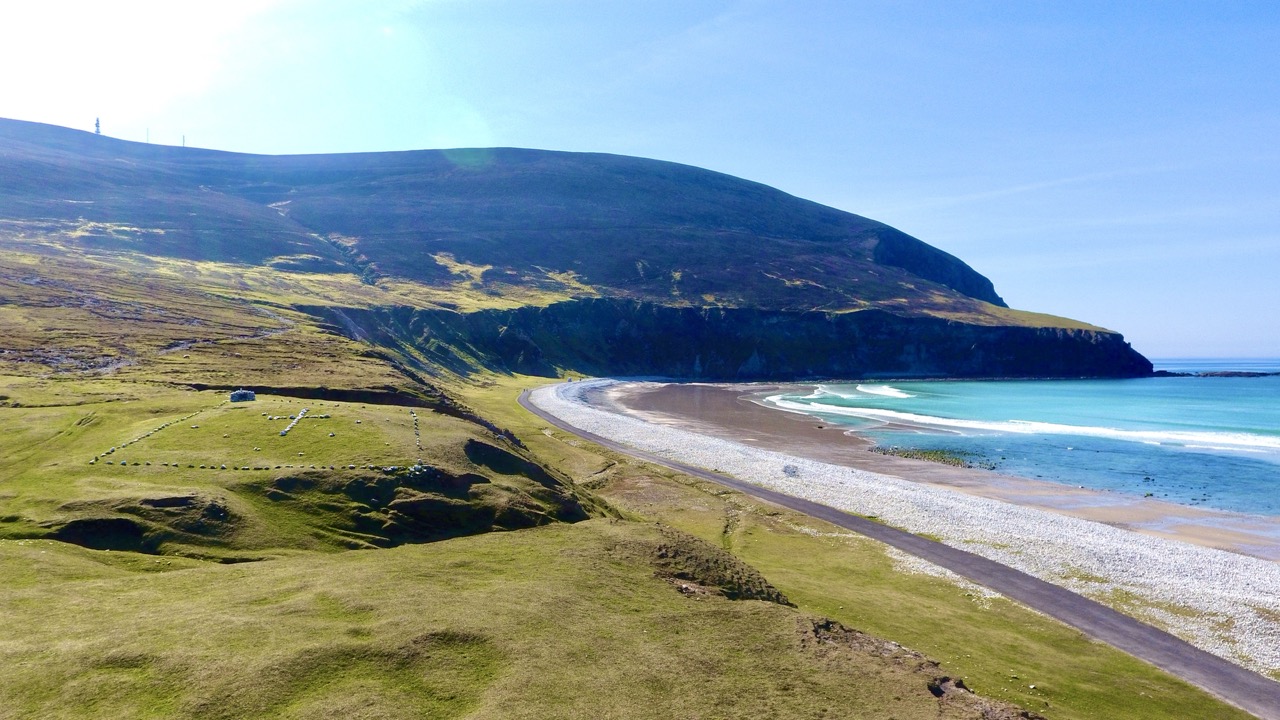
Keem Bay with turquoise water and green hills on Achill IslandAerial view of Achill coastline, beach and mountain slopes

History Woven Into the Ground

Achill’s history is not confined to books or museums. It is built into the fields, the walls, and the place names.

The island has been inhabited for thousands of years. Evidence of early farming communities can still be found in megalithic tombs and ancient field systems. Later came early Christian influences, with small monastic sites and traditions tied to saints and pilgrimage.

In the 19th century, Achill became a focal point for outside intervention through the Achill Mission, led by Rev. Edward Nangle. Based in Dugort, the mission attempted to convert the local Catholic population to Protestantism, particularly during the famine years when people were most vulnerable. This period left a complicated legacy, still discussed in local history.

The Great Famine itself changed Achill forever. Population declined sharply. Entire communities disappeared. The Deserted Village stands as one of the clearest physical reminders of that loss.

Later again, Achill became connected to the mainland by bridge, bringing new movement, new opportunities, and eventually tourism. But even with that, the island has held onto a strong sense of identity.

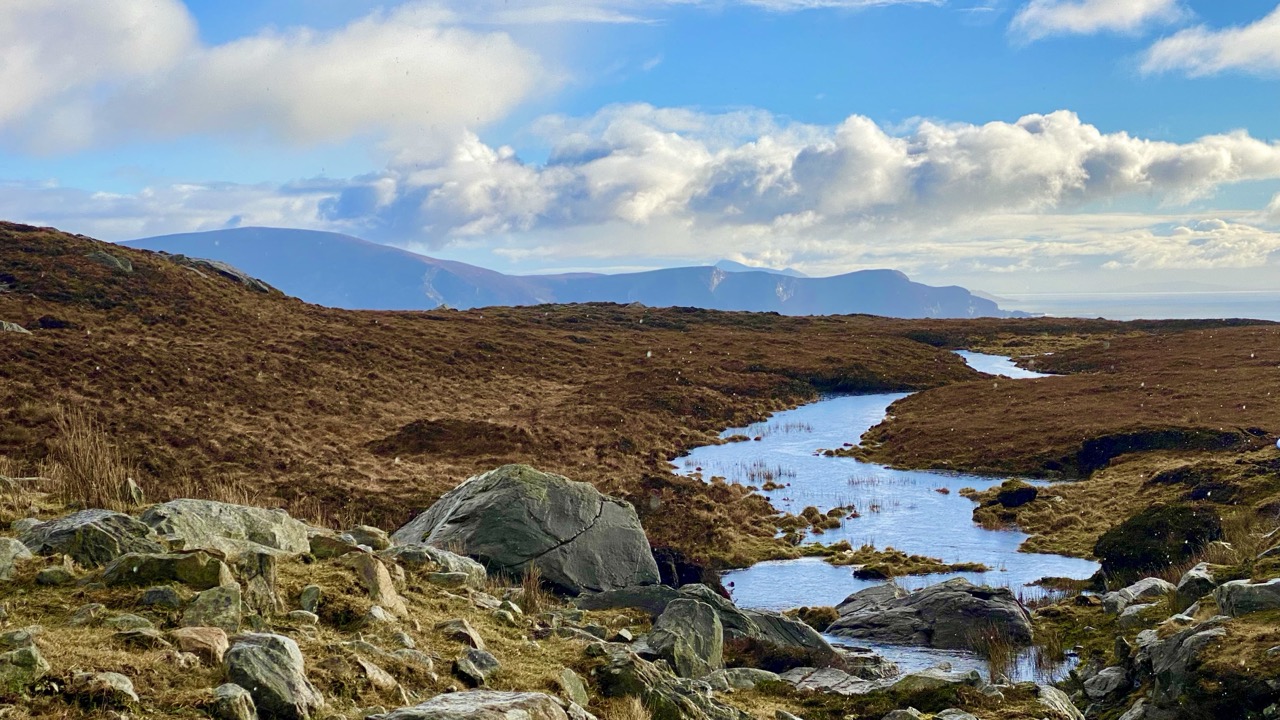
Rocky bogland stream with distant Achill mountains and Atlantic lightKeel Strand sign overlooking beach and cliffs on Achill Island

Culture, Language, and Summer Schools

Achill is part of the Gaeltacht, where Irish is still spoken as a living language. It is not just preserved for visitors. It exists in everyday conversation, in place names, and in how people understand the world around them.

During the summer months, this cultural life becomes more visible through summer schools and gatherings. Students come from across Ireland and abroad to learn Irish, often staying in local homes. Days are spent in classrooms, but evenings are filled with music, conversation, and storytelling.

Traditional music sessions are a regular feature, especially around Keel and Dugort. These are not performances in the formal sense. They are social occasions, where musicians sit together and play, and anyone is welcome to listen, or join if they can.

There is also a strong literary and artistic connection to Achill. Writers, painters, and photographers have long been drawn to the island, not just for its beauty but for its atmosphere. It is a place that encourages observation.

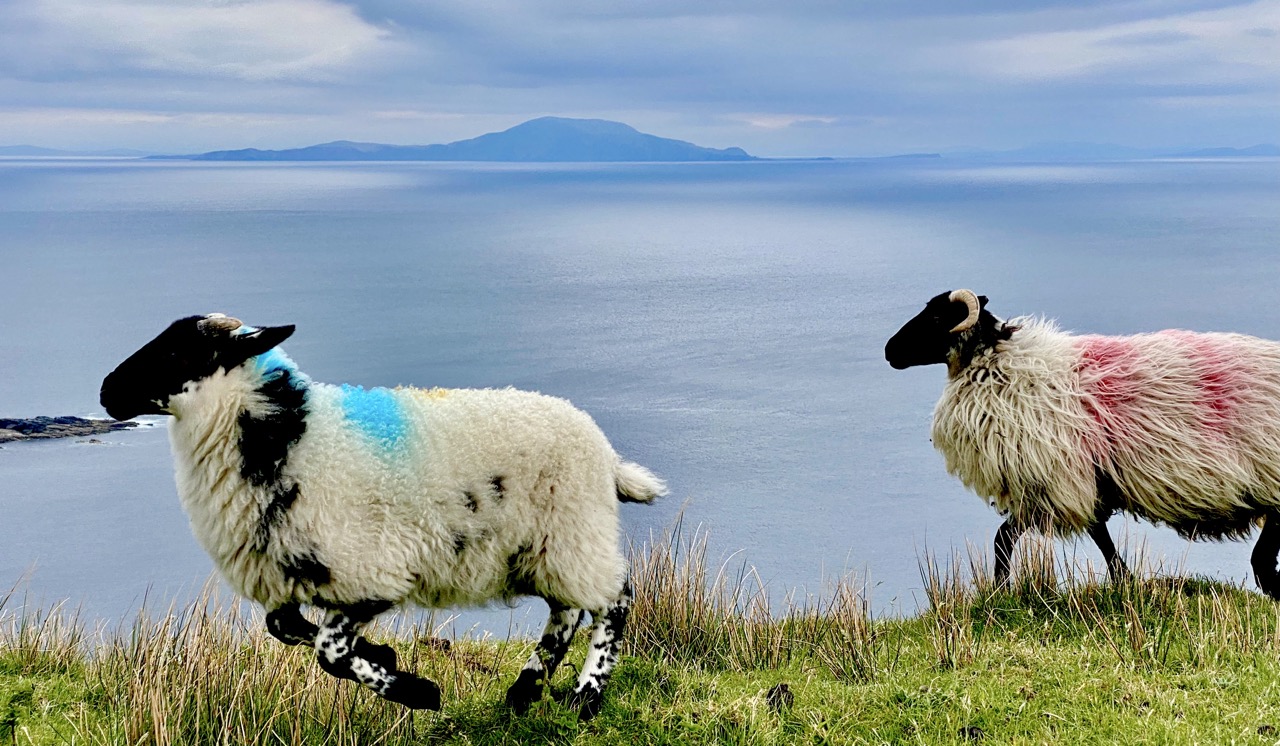
Two sheep above the Atlantic coast on Achill Island

Life Outdoors

For visitors, Achill offers an unusual range of activities, all shaped by the landscape.

Keel Beach is one of Ireland’s best known surfing spots. The long Atlantic swell makes it suitable for both beginners and experienced surfers. On calmer days, it is also ideal for swimming, walking, or simply sitting and watching the changing light.

Walking is perhaps the best way to understand the island. Routes vary from gentle coastal paths to more demanding mountain climbs. Slievemore provides a steady ascent with wide views across the island, while Croaghaun is more challenging and exposed.

Cycling has become increasingly popular, particularly with the extension of the Great Western Greenway, which links Achill to the mainland. It allows visitors to move through the landscape at a slower pace, taking in villages, coastline, and open countryside.

Fishing and boating remain part of local life, though not always visible to visitors. Traditional currachs, once common, are still remembered and occasionally used, linking present-day Achill to its maritime past.

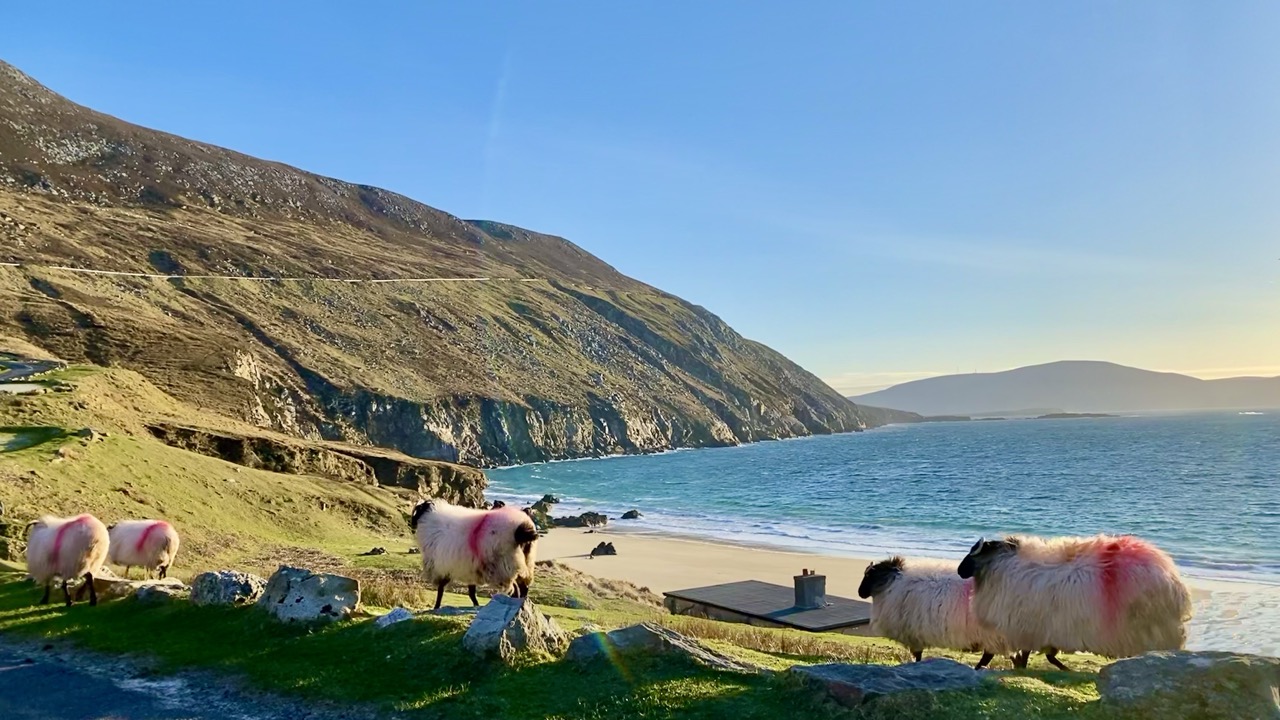
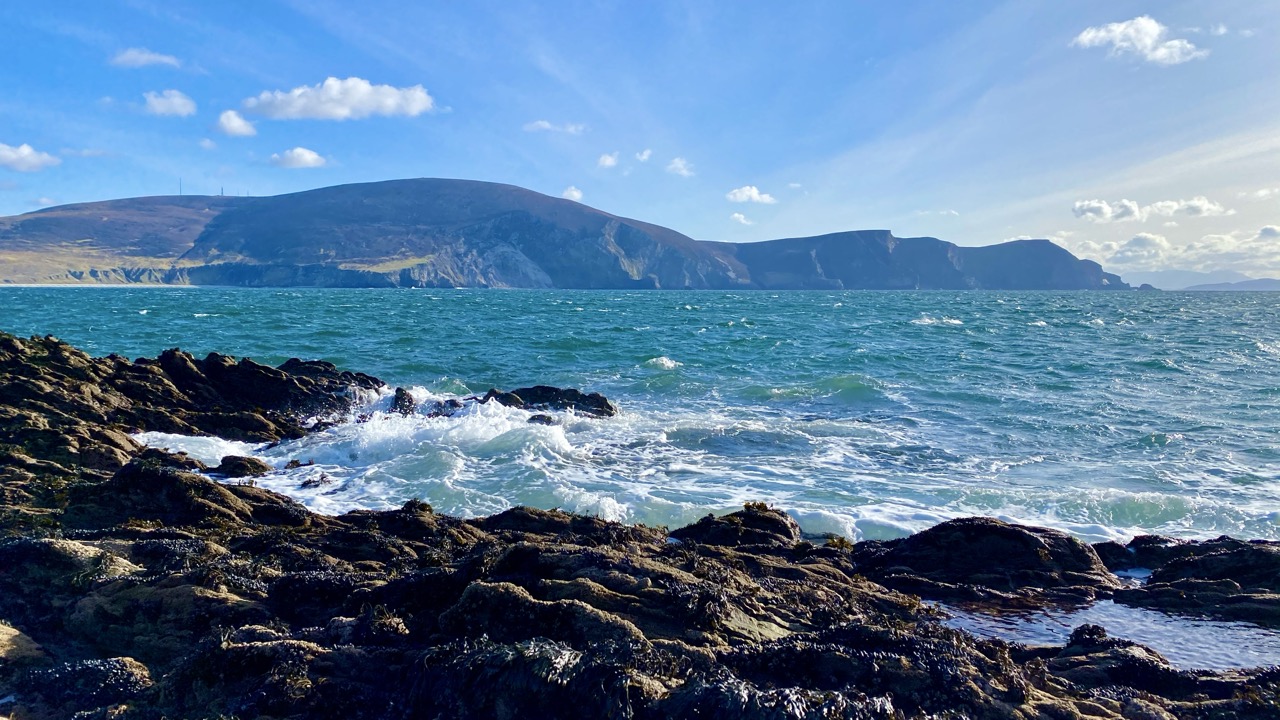
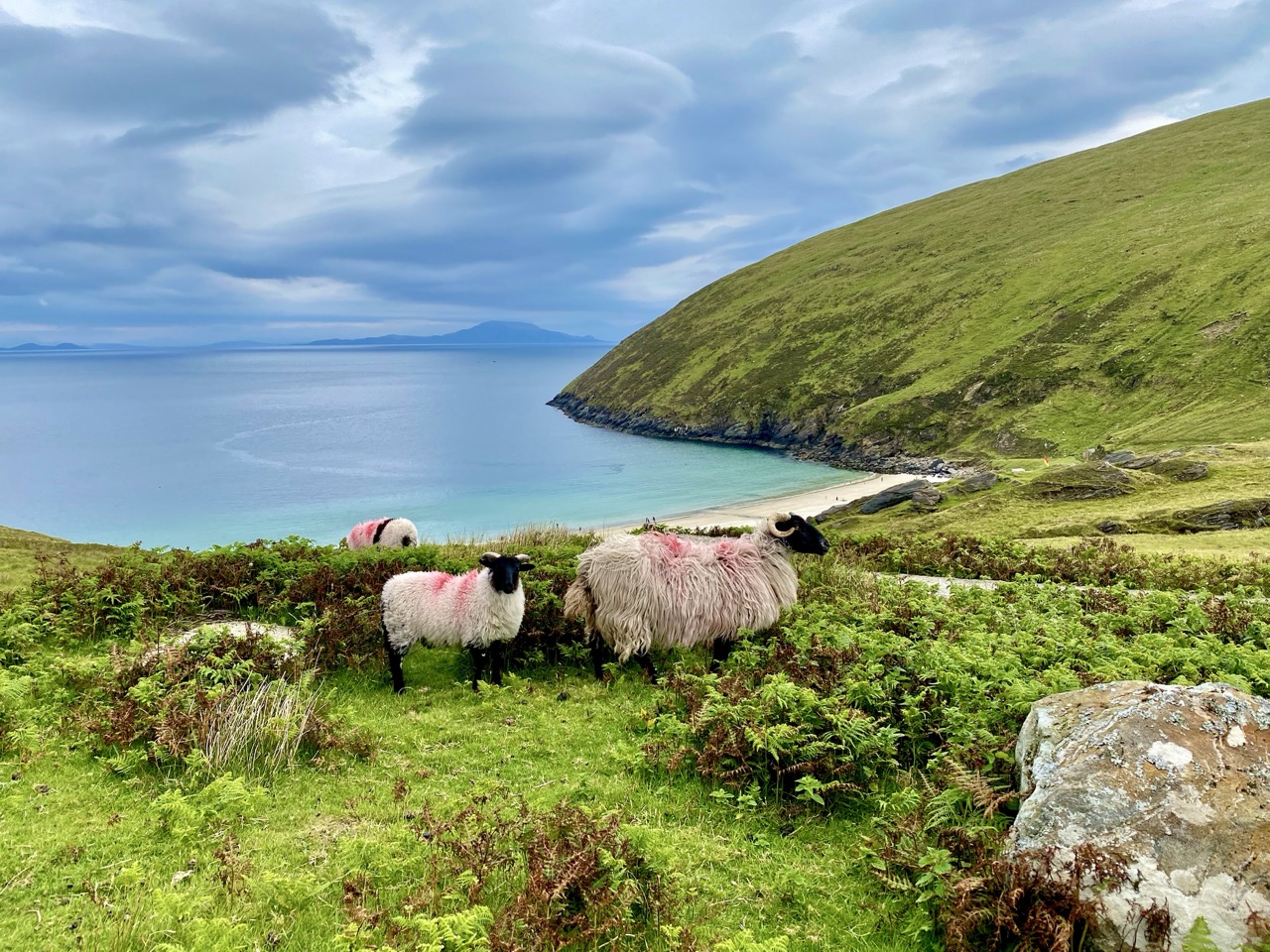
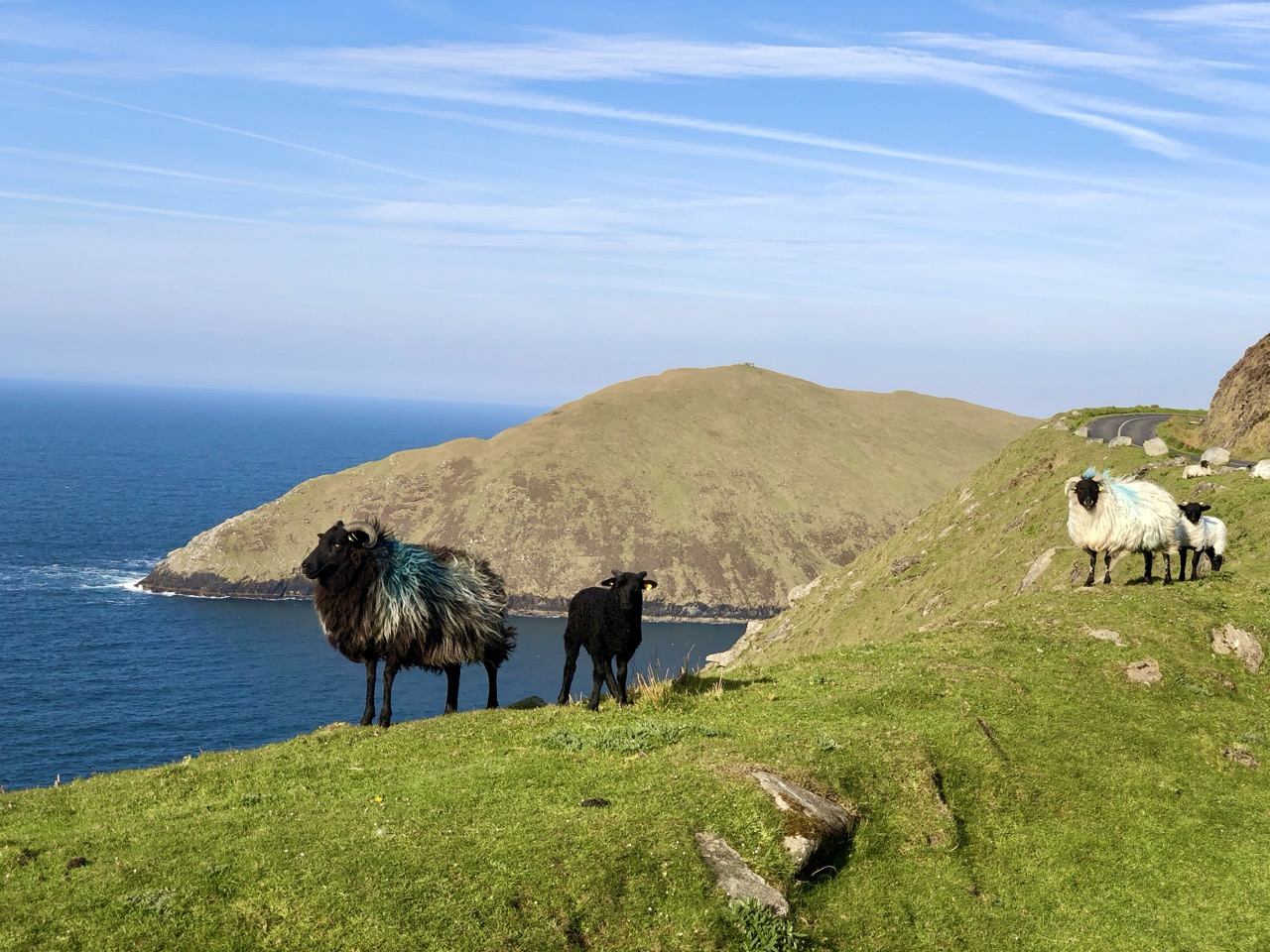
Sheep grazing above a bright Atlantic beach on Achill IslandAtlantic waves breaking on rocks with Achill cliffs beyondSheep on green hillside overlooking a sheltered Achill bay

A Place That Stays With You

What sets Achill apart is not any single feature. It is the combination of elements. The landscape, the history, the language, and the people all exist together, shaping the experience in ways that are difficult to reduce to a simple description.

You might arrive for the beaches or the scenery, but what tends to stay with people is something less obvious. It might be a conversation in a pub, a story told in passing, or the feeling of standing alone on a hillside looking out over the Atlantic.

Achill does not try to impress in a loud way. It is quieter than that. But it has depth, and that is what draws people back.

Sheep standing on a green coastal hillside above the Atlantic